Reeds, Records and Really Good Questions: A Day at the Inaugural Evidence and Research Forum 2026

Reeds, Records and Really Good Questions: A Day at the Inaugural Evidence and Research Forum 2026

The floating village at Brockholes, peeking out over the reeds on a grey autumn morning.

On a misty October morning at Brockholes Nature Reserve, teams from Wildlife Trusts across the UK gathered for the inaugural Evidence and Research Forum. Among the reeds, records and really good questions, Durham Wildlife Trust joined the conversation about how we know what truly works for nature, and how sharing that knowledge can help wildlife thrive everywhere.

How do you know that something you have done for nature has actually worked? You dig a pond, plant a hedge or rewet a field, and a year later the frogs and insects arrive. But would they have come anyway? Would a different approach have brought them back faster?

That simple question took three of us from Durham Wildlife Trust across the Pennines this October. Mark Dinning, our Ecology Manager, Bill Oxbury, our Chair of Trustees, and I (Harriet Palin, Development Officer: Grants & Trusts) joined colleagues from Wildlife Trusts all over the UK for the very first Evidence and Research Forum, a full day of talks, workshops and plenty of cake dedicated to finding out what works for nature and sharing it with each other.

A village that floats

Our hosts for the day were The Wildlife Trust for Lancashire, Manchester and North Merseyside at Brockholes, just outside Preston. If you have never been, it is well worth the trip. What was once a sand and gravel quarry beside the River Ribble is now 250 hectares of lakes, reedbeds, wildflower meadows and woodland, and at its heart sits an award-winning Visitor Village that genuinely floats on the water.

As someone who works from Rainton Meadows, itself a nature reserve created on former opencast mining land, I found it hard not to feel a sense of kinship. Both places show what can happen when land that has been worked hard is given back to wildlife.
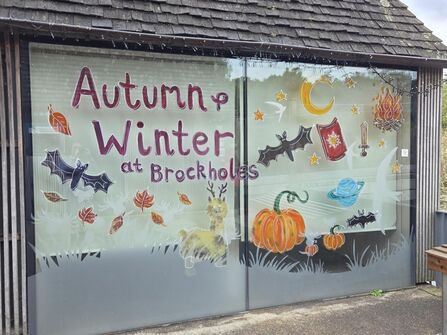
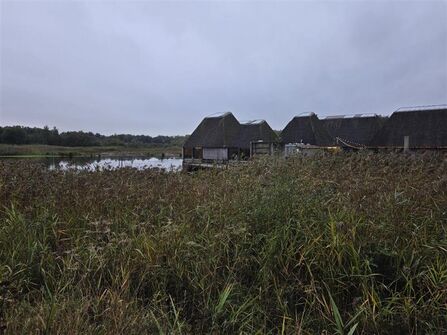
Before the first talk began, Mark and I made sure we had a good look around the reserve. Grey skies were no deterrent, and it was a treat to see how Brockholes has been shaped for wildlife and visitors alike!

A person wearing a green and blue jacket and a cap stands beside a wire fence, looking through binoculars over a wetland landscape. The scene shows tall grasses and vegetation in the foreground, with a wide expanse of water and distant trees under a cloudy grey sky — capturing a peaceful moment of birdwatching or wildlife observation.

Mark Dinning, our Ecology Manager, binoculars at the ready before the forum.

So what is evidence, anyway?

'Evidence' can sound like something from a courtroom drama, but in conservation it is much more down to earth. The Wildlife Trusts describe it as the body of facts and information that tells us whether or not something is true. In practice, that means the counts, photographs, surveys and observations that show us whether a meadow is getting richer, a river cleaner or a species more common.

The forum was organised by the Evidence Emergency Project, a collaboration between Wildlife Trusts that began in 2021, working with the Science and Research Team of The Wildlife Trusts, the experts at Conservation Evidence and with support from the National Lottery Heritage Fund. Its aim is a simple one: to make sure that across all 46 Wildlife Trusts, the decisions we make for nature are grounded in the best information we can find.

Evidence does not only come from laboratories. Much of it is gathered by the people who know a place best: the volunteers who walk the same route every spring, the families who send in a sighting from their back garden and the reserve teams who notice when the water level drops. Bringing all of that together is what turns lots of individual moments into a clear picture of how nature is faring, and where we can help it most.

Squirrels, grazing, peat & the sea

The morning was a showcase of what Wildlife Trusts are already learning, and it was a real joy to hear.

Counting red squirrels

Melissa Wharram from Lancashire Wildlife Trust told us about more than 20 years of red squirrel surveys on the Sefton Coast. Twice a year, staff and volunteers walk the same one-kilometre routes, which helps them understand how many young are raised each summer and how many squirrels make it through the winter. The team has moved from paper forms to a mobile app, and has found that maps are one of the best ways of sharing the results with the public.

It struck a chord with us. Long-term monitoring of a single species is exactly what we are currently investing in for the willow tit, one of the UK’s fastest declining birds, with Jason Thompson, our new Willow Tit Research and Ringer Officer, working at Rainton Meadows and other sites.

No fences?

Dr Juliet Hynes from Gloucestershire Wildlife Trust introduced us to their use of ‘no fence’ technology, which is essentially cattle wearing GPS collars. The collars are usually used as virtual fences, but they also record how each animal moves its head, which shows when it is grazing and when it is resting. Mapped across the seasons, the data reveals which parts of a site the cattle favour, when they head for the ponds on hot days and how their grazing shapes the habitat. This helps them plan out how they use cattle on their sites. 

Conservation grazing is a big part of how we look after our own reserves. Across our sites, cattle and sheep help keep grassland open and varied, nibbling back coarse grasses and scrub so that wildflowers and the insects that depend on them can thrive. We also have our very own herd of hardy Exmoor ponies, wild at heart and happy to graze rough ground in all weathers, which makes them perfect partners for this kind of work. On the wetlands of the Great North Fen, grazing is helping to open up wet grassland for wading birds such as lapwing and curlew.

Patience on the peat

Dr Gautier Nicoli of the Yorkshire Peatland Partnership shared four years of monitoring across 28 upland peat sites in North Yorkshire and the North Pennines. The scale of the effort was remarkable: 668 vegetation plots, 870 peat depth measurements, 456 peat cores, 80 volunteer days and around 500 hours of sorting the data afterwards. The headline was encouraging. Restoration can stop peatland from declining and set it on a path to recovery, although nature works to its own timetable and some sites take longer than others.

That message of patience rings true for our ambition to bring back the lost wetlands of the Durham Carrs. Working with Durham University, we have already taken soil cores across the site to understand peat conditions and depth, laying down the baseline that will let us measure change over the coming years and decades.

A calm wetland scene showing a shallow pond covered with clusters of small green lily pads. Behind the water, tall brown reeds and grasses rise densely, with green trees forming a backdrop under an overcast sky. The reflection of vegetation on the water adds depth to the tranquil, natural setting.

Lily pads and reeds at Brockholes, a reminder of what patient wetland restoration can achieve.

Citizen scientists at sea

From the coast, Daniele Clifford of the Royal Society of Wildlife Trusts reminded us that counting things underwater is hard! Yet some of the most powerful evidence in the movement has been gathered by volunteers. Divers and snorkellers taking part in Seasearch have built up more than 40 years of records, while Shoresearch, the intertidal survey supported by The Wildlife Trusts, has collected more than 70,000 records from rockpools and shores around the UK. Those records have helped make the case for Marine Conservation Zones, keep watch over marine protected areas and track invasive species and those that signal a changing climate. Shoresearch brings real benefits for the people taking part too, from better physical and mental health to a deeper understanding of our seas and a stronger connection to their local coast.

Daniele also shared the story of the Marine Strandings Network in Cornwall, where a 24-hour public hotline and a dedicated team of volunteers respond to stranded whales, dolphins and porpoises. Their records showed that around 30% of stranded cetaceans had been caught as by-catch in fishing gear. That evidence has since helped to shape measures to reduce by-catch, a ban on bass pair trawling in English inshore waters and new protocols for naval sonar activity. It was a powerful reminder that when people record what they see, the evidence they gather can bring about change on a national scale.

Shoresearch happens right here on the North East coast too, and anyone can join in. You can find out more on our citizen science page.

Flocking together

After a well-earned coffee, the conversation turned to how Wildlife Trusts can learn from one another.

Birds of a feather

Dr Anett Kiss shared how 13 Wildlife Trusts working on temperate rainforest restoration, along with the Rothbury Estate in Northumberland, are trialling a shared way of monitoring their sites. Her point was a lovely one: the aim is not to collect more data, but to collect useful data. When everyone records nature in the same way, results from one valley can be compared with another, and patterns emerge that no single site could reveal on its own. Dr Lawrence Ball showed how Kent Wildlife Trust is doing this across its own reserves, with 219 surveys on the go using everything from drones to sound recorders.

Working together is something I feel passionate about. I sit on the steering group for a national data collection process that helps Wildlife Trusts understand how communities develop their connections with nature. It grew out of our fantastic work with Nextdoor Nature, which supports neighbourhoods to bring nature into their own streets and green spaces, and it means the difference that community work makes can be recorded in the same way and added up across the whole country.

Wisdom from the hedgerows

One of my favourite talks came from Dr Vanessa Cutts of Conservation Evidence, who reminded us that some of the most valuable knowledge in conservation never makes it into a scientific paper. It lives in the heads of reserve staff and volunteers and is passed on by word of mouth. Her team is now exploring a shared database so that practical conservation advice and evidence is not lost. 

An outdoor information board titled “Coppice Woodlands” stands on teal posts beside a grassy path surrounded by dense green trees. The illustrated sign explains woodland management, showing tree stumps, regrowth, and wildlife such as deer and birds. The logo of Lancashire County Council Countryside Service appears in the top corner, highlighting sustainable woodland practices.

Coppicing is a perfect example of know-how handed down through generations of woodland workers.

At Durham Wildlife Trust, we see this every day. Our reserves team, volunteers and trainees carry a wealth of hands-on experience, from building leaky dams and sluices to managing meadows, and capturing that knowledge is just as important as any survey.

Paths through the reeds

Before lunch, a panel looked ahead to how Wildlife Trusts might work even more closely on evidence in the future. The conversation ranged from agreeing the big questions we most want answered, to sharing survey methods so that local records can add up to a national picture, to supporting one another to produce evidence we can all stand behind. Just as important was how we use what we learn to inspire people and help communities make change happen in their own neighbourhoods. It was a hopeful discussion, and a reminder of how much we can achieve when 46 Wildlife Trusts pull in the same direction.

Telling tales (true ones!)

The afternoon workshop, 'Trust Me: Communicating Evidence With Confidence', began with a deceptively tricky question: how do you know when you know something? That opened up a lively discussion about what can be considered evidence in the first place. Survey data and scientific papers clearly count, but so do photographs, local knowledge, people’s own stories and the changes a community notices in its own patch.

We also explored what a community really is: a group of people connected by a shared place, interest or identity. Working with a community means supporting change that grows from the grassroots up, and evidence has a big part to play. When local people gather and share their own evidence, it gives them the confidence and credibility to make direct changes where they live, whether that is asking for a verge to be managed for wildflowers or making the case for a new green space. The same evidence also needs telling in the right way for the right audience: clear and concise for decision makers, focused on impact for funders and engaging and relatable for all!

A group of people sit around tables in a bright, modern meeting space with high wooden beams and string lights overhead. At the front, a presenter stands beside a large screen displaying a slide titled “Trust Me: Communicating Evidence With Confidence.” Attendees listen attentively, creating a collaborative workshop atmosphere.

The Communicating Evidence With Confidence workshop in full swing.

We see this in Seasons of Connection, our nature and wellbeing programme that has taken place this year at Rainton Meadows. Some of our most powerful evidence there has not come from a spreadsheet at all. After a winter session on birdwatching, a group of participants went off and organised their own bird count for Durham Wildlife Trust the following weekend. That one story says more about the difference the programme makes than any chart could, and it is exactly the kind of evidence the workshop encouraged us to celebrate.

The day closed with a lively panel asking where we go next. Two ideas stayed with me on the long drive home. First, the people doing conservation on the ground should help shape the questions researchers ask. Second, it is just as valuable to share what did not work as what did, because that is how we all get better, faster.

Homeward bound to Durham

Durham Wildlife Trust cares for 54 nature reserves across County Durham, Sunderland, Gateshead, South Tyneside and Darlington, and every one of them is a living record of what works for wildlife. We came home with full notebooks, new friends across the movement and plenty of ideas for how our survey work, our community projects and the way we share our results can keep improving. Having Bill with us was a welcome reminder that this is something our trustees care about just as much as our staff.

We look forward to adding Durham’s voice to these conversations as they develop.

A wooden walkway crosses over a pond covered with small green lily pads. Tall reeds line the water’s edge, and trees with early autumn foliage stand in the background. A person walks along the path near the end of the bridge, adding a sense of scale to the tranquil wetland scene. The foreground shows wooden decking and metal railings overlooking the water.

The boardwalk and drawbridge out of Brockholes!

Want to add to our evidence?

The best part? You do not need a lab coat to contribute evidence for nature. Every sighting you send us helps build the picture. You can:

Share your wildlife sightings through our sightings page or via iRecord.

Join a survey such as Shoresearch on our coast or Bugs Matter, which tracks flying insects. Details are on our citizen science page.

Volunteer with us on our reserves and projects. Find out more on our volunteering page.

Come along to an event and see the work for yourself. Take a look at what is on.

The proof of the pudding

A huge thank you to The Wildlife Trust for Lancashire, Manchester and North Merseyside for being such wonderful hosts, to the Evidence Emergency Project team and planning committee for a brilliantly organised day and to every speaker who shared their work so generously. Special mention must go to the badger-topped chocolate cake, which was, we can confirm, backed by excellent evidence.

A cosy autumn display featuring carved pumpkins with smiling faces, flickering candles, and an assortment of small decorated cakes. The pumpkins sit on wicker baskets and wooden crates, surrounded by dried leaves and seasonal decorations. The warm candlelight and rustic setting create a festive Halloween atmosphere.

Evidence of a very good lunch, served with a seasonal twist.