Supporting land managers, restoring nature: Durham Wildlife Trust’s new land advice service

Supporting land managers, restoring nature: Durham Wildlife Trust’s new land advice service

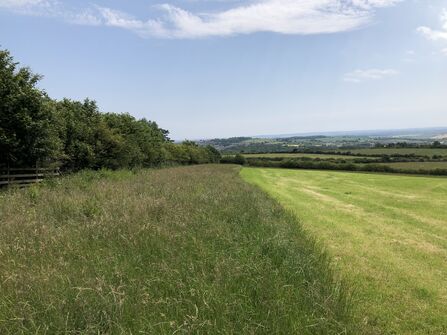
Grass buffer strip and good condition hedgerow in productive grassland. Photo by Stephen Thompson.

Stepping up for nature with a brand‑new free land advice service, offering practical, independent support to farmers and land managers across the region.

Durham Wildlife Trust has been providing land management advice for more than 50 years, supporting farmers and land managers who manage habitats, produce food, and provide public benefit. Collaborative efforts have led to the successful delivery of projects and the creation of new habitats. The Trust has also supported farmers in developing environmental schemes, helping realise the financial benefits of farming with wildlife.

Based on this foundation and in response to the challenges facing wildlife, the Trust is launching a new, dedicated, and free land advice service for all farmers and land managers.

Three Highland cattle grazing in a grassy field—one large black adult and two smaller light brown calves—surrounded by trees under a partly cloudy sky.

Highland cows at Low Barns Nature Reserve. Photo by Stephen Thompson.

Why provide land advice

Back in 2010 the landmark Making Space for Nature report by John Lawton called for landscape scale nature networks. The report recommended bigger, better, and more connected spaces allocated and protected for nature.

Despite this call for action, wildlife in the UK has declined dramatically since 2010.

 Click here to read the 'State of Nature' report. 

The Trust manages more than 1,500ha of grassland, woodland, wetland and now several farmland sites. However, combatting wildlife declines is impossible without the wider landscape also delivering for nature.

Fragmented habitats are less resilient to extreme heat, flooding and other challenges. For nature to thrive action is needed at a landscape scale. Critically, the productivity and sustainability of food production rely on the ecosystem services provided by nature, such as pollination, healthy soils and clean water. 

"The long-term decline in the UK’s natural capital has been identified as a pressing risk to UK food production." ~ United Kingdom Food Security Report 2024

Click here to read the full United Kingdom Food Security Report 2024

Working with farmers and land managers is essential to achieve the international, UK and Wildlife Trust strategic goal to protect, connect and manage 30% of land and sea for wildlife by 2030.

A green tractor pulls a round baler across a grassy field, producing cylindrical hay bales. One bale lies near the baler, with more scattered in the distance. Forested hills surround the rural scene.

Hay making. Photo by Stephen Thompson.

Durham Wildlife Trust's advice service

After seven years at the Trust in various roles, from working with volunteers to supporting catchment scale environmental initiatives, Stephen Thompson has now moved to a new role of Land Advice Manager. Raised on a family farm in North Yorkshire, Stephen understands the realities facing farmers and land managers today and what is needed to support nature recovery. As Land Advice Manager, Stephen uses his experience to support farmers and land managers across Durham, Darlington, Gateshead, South Tyneside and Sunderland.

Thanks to a coordinated funding effort across the Wildlife Trust federation, Stephen is able to provide free and independent advice to farms and land managers, supported by an expert, in-house team of ecologists, educators, community organisers and wildlife specialists. 

"Since commencing my new role, I’ve visited many land holdings including arable farms, hay meadows, ancient woodland and even a school playing field. On these visits I provided advice and recommendations, and I’m now in the process of planning follow-up survey work.

"To spread the word, I have been attending agricultural and business events and connecting with other advisors. Attending a farmer-led workshop on promoting best practice for supporting Dung Beetles in grazing pastures was a particular highlight! These invertebrates are vital ecosystem engineers, building soil health and food chains for other wildlife." ~ Stephen Thompson

Click here to learn more about dung beetles in farming 

map of durham wildlife trust area

Contact us 

For local, independent advice about your farm, smallholding, estate, woodland or community green space, whether you’re a farmer, land manager, business, institution, community group, or local authority, please get in touch. 

Email us or call 0191 5843112.

A range of free professional services are offered:

  • Information on farm and land management to benefit wildlife.
  • Information on ecological surveys and monitoring wildlife and habitats.
  • Mapping environmental features and wildlife connectivity.
  • Information on Biodiversity Net Gain and other green finance.
  • Links to a range of projects and organisations for further advice and funding.